
























Articles
Who earns their stripes
March 2024
Adidas the well known German sportwear and apparel brand, around 1949 started using three stripes on a pair of running shoes, with the three stripes now being an integral part of Adidas’ brand identity across footwear and clothing.
Thom Browne is the eponymous fashion house launched in 2001, with a focus on tailored aesthetics. Part of Browne’s design includes the use of stripes; predominantly a four block colour stripe and a five red, white and blue stripe.
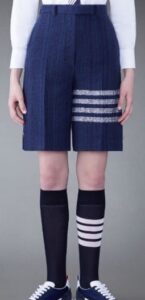
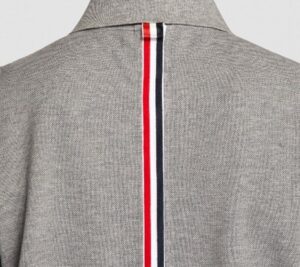
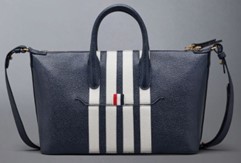
The two brands have had a number of legal disputes, starting in 2007, when Adidas objected to Thom Browne’s use of a three stripe design on jackets, leading to Thom Browne agreeing to add a fourth stripe. The popularity of the Thom Browne brand grew, expanding from formal business attire into other clothing categories, including casual and sports and in 2018, Adidas objected to Thom Browne’s EU application for a device of four red, white and blue stripes. Despite discussions regarding potential amicable resolution, Adidas initiated US infringement proceedings against Thom Browne in June 2021.
The US Case
Following the filing of the suit in 2021, after a nine day trial in January 2023, the jury found in favour of Thom Browne. Browne did not infringe Adidas’ three-stripe mark and was not liable for damages or profits. Although both were fashion/apparel brands, they operated in different markets, served different customers and offered products at strikingly different price points.
The dispute does not end there however, as Adidas have not only appealed the decision, but have also requested a new trial, based on previously undisclosed emails indicating an internal awareness of the similarity of Browne’s stripes to those of Adidas. These emails were part of a separate trade mark dispute in the UK, but were allegedly not disclosed during the initial trial.
The EU Case
Further, Adidas objected to Thom Browne’s application for a figurative mark consisting of parallel stripes in Classes 18 and 25, claiming likelihood of confusion and reputational grounds, based on EU, German and Benelux earlier rights for various iterations of their three stripe trade mark:
| Thom Browne EU Application
|
Adidas’ Earlier Rights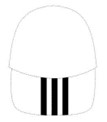 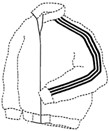 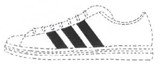 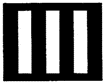 |
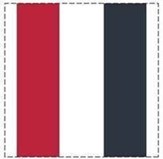
Adidas submitted extensive evidence of the use of their three stripes, and the EUIPO acknowledged that the sales figures, marketing expenditure, market share and third party press articles all showed that the marks enjoyed a high degree of recognition among the relevant public, particularly around sportswear and footwear.
The goods at issue were deemed identical and the signs were determined to be visually similar only to a low degree. Given that all the marks at issue were figurative, it was not possible to compare the marks aurally or conceptually.
On the global assessment of factors, the EUIPO held that the arrangement and colours of the stripes were different, and that consumers were capable of perceiving differences in the stylisations. Accordingly, there was a sufficiently distinct visual impression and no likelihood of confusion.
When determining the reputation claims, the EUIPO was of the view that despite the reputation or recognition of the Adidas earlier rights, the similarity of the marks between those earlier rights and the application were quite basic, being simple shapes consisting of stripes. The use of stripes on clothing or footwear could not be attributed significant weight, as they are frequently found in the course of trade in relation to clothing items. As such, it was deemed unlikely that consumers would make a mental connection between the two parties’ signs and thus would not establish a link.
Defense or Offense
During the US proceedings, it was documented that Adidas has launched over 90 formal court proceedings against third parties, and negotiated more than 200 settlement agreements since 2008. Adidas have a broad trade mark portfolio of over 6,000 trade marks globally, including the three-stripes in a variety of different positions.
A number of amicable resolutions have been achieved by Adidas, and their strategy acts as a deterrent to third parties considering adopting stripes in their branding. Such settlements can have additional benefits of controlling use by third parties going forward, something which opposition proceedings do not. It may be an aggressive strategy, but protection of a “non-traditional” trade mark such as three-stripes will always be more difficult than pure word marks. The three- stripes are relatively simple in design, and need to be strongly safeguarded. One benefit of so many different proceedings, is that brands can see what has and has not been successful, and how to better protect the device going forward.
The enforcement strategy here, despite some decisions not in their favour, shows Adidas seek preventative action to avoid dilution of their stripes and the ADIDAS brand as a whole.
Brand Partnerships
The US case highlighted issues around future expansions and brand collaborations. Adidas initially did not perceive Thom Browne to a be a competitor, given the very different target audiences. However, as the popularity of Browne’s collection grew, it has led to a number of partnerships, including NBA star LeBron James’ UNKNWN label and football team FC Barcelona. Adidas have also expanded into the luxury market with partnerships with Gucci, Prada and Stella McCartney.
Other brands have also been known to collaborate, including Nike x Tiffany, Christian Louboutin x Marvel, Gucci x Disney, Liquid Death v Martha Stewart, Starbucks x Samsung and H&M x Isabel Marrant.
Such partnerships result in new creations that may indeed open new product lines, or indeed steer a brand closer to a potential conflict and a newly perceived competitor. There can be issues around licensing and royalties, and the parties need to have agreements in place that address use of trade marks and brand image, publicity, quality control, damage, duration and termination (amongst others).
Summary
The battle for non-traditional branding elements and enforcing those against others continues, with this not the first and definitely not the last clash to be seen. Are two and three stripes similar? Horizontal vs vertical?
As always, these matters will often turn on the specific facts of the case, as well as the evidence put forward. However, adverse decisions should not stop brand owners from taking steps to maintain and enforce their rights and devise a strategy that, overall, works for them.