


























2024 has been a busy year for trade marks, with a number of significant decisions being issued by the UK courts, including Tesco v Lidl, Thatchers v Aldi and the long-awaited Skykick UK Ltd v Sky Ltd decision of the Supreme Court.
Some of the above mentioned cases have their own article, but we’ve also rounded up some of the retail-related cases from around the world below.
 Katy Perry (Trade Mark & Singer) v Katie Perry Trade mark (owned by Katie Taylor, née Katie Perry)
US singer Katy Perry (“US Singer Katy”) was successful in her appeal against Australian fashion designer Katie Taylor, whose name at birth was Katie Perry. Ms Taylor, the Australian fashion designer, had registered “Katie Perry” as a trade mark for her fashion line a considerable time after the US singer Katy Perry had become famous. Following a cease and desist letter from US singer Perry regarding the name in 2009, Taylor filed infringement proceedings against the US singer for selling merchandise in Australia bearing her name Katy Perry. Taylor claimed she had registered her Katie Perry trade mark in 2008, and had been using it in relation to her business since 2007.
Whilst Taylor was successful at first instance, the decision was overturned on appeal. Taylor was aware of US Singer Perry’s international reputation ahead of registering her own “Katie Perry” trade mark, and US Singer Perry had been using her name as a trade mark for five years before Taylor started her own business.
Key Takeaways: a prior international reputation can trump a later-filed trade mark registration. There is also no inherent right to use or register one’s previous name, and especially where the motives for using and registering it appear to derive from the unfair advantage one would secure in doing so.
Douwe Egberts v Cantarella Bros
Douwe Egberts claimed Canterella was infringing its rights in its registered trade mark for the shape of a coffee jar. Douwe Egberts’ coffee jar was used to sell its Moccona coffee brand. Cantarella used a glass jar with a glass stopper lid for its Vittoria coffee. Canterella counterclaimed that Douwe’s 3D trade mark registration should be cancelled.
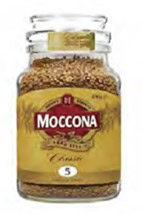

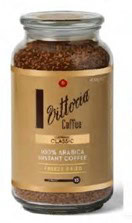
The counterclaim was dismissed, as Douwe Egberts had evidenced that the shape of its jar had acquired distinctiveness and was capable of registration. However, the infringement claims were also dismissed. The judge was of the view that Canterella had not used the shape of its jar as a trade mark, and it was “relatively plain”. In addition, given that Vittoria was a well-known coffee brand in Australia, and the jar was never used without labels, it was unlikely that consumers would be confused into thinking that the Vittoria coffee is from Douwe Egberts or the company behind the Moccona brand.
Full decision here.
Key Takeaways: a lot of the assessment in this case turned on the evidence of advertisements provided by both parties, and the prominence of the packaging and attention paid to such packaging. Douwe Egberts’ adverts would sometimes focus on the packaging and how it could be reused. That was not the case for Canterella, and simply featuring a product in packaging does not necessarily constitute use of that packaging as a trade mark to identify and distinguish the commercial origin of the product from that of anyone else’s product.
 Volvo – shape of headlights
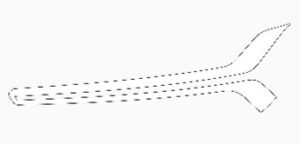
In June 2024, the EU’s General Court annulled a decision of the EUIPO Board of Appeal. The EUIPO Board had refused to accept Volvo’s application for the shape of a headlight as a 3D trade mark. The headlights are used on the Volvo EX90 model and are known as the “Thor Hammer Headlight”.
The General Court stated that the 3D mark met the threshold for minimum distinctive character and would be perceived as an indication of origin. It also agreed with expert witnesses that headlight design is an important factor linked with identifying and distinguishing commercial origin of vehicles. The General Court also accepted that the headlight design differed significantly from other headlights on the market.
Volvo had also filed other figurative marks which are under appeal (last two columns in table). It will be interesting to see the impact of this decision on those appeals.
| EUTM App No. 18560591 | EUTM No. 16791956 | EUTM App No. 18701931 | EUTM App No. 18697721 |
| Appeal Allowed | Registered | Appeal Pending | Appeal Pending |
 |
 |
 |
 |
Key Takeaway: If it can be proved that an element is distinctive, it can be worth pursuing a case even through multiple appeals, especially if there is sufficient evidence of use and expert evidence relating to the market and industry. The decision may assist in the acceptance of other 3D trade mark filings.
Decision of General Court here.
Similarity Tool must be followed
The EUIPO’s similarity tool is a useful database comparing goods and services. An October 2024 decision of the Cancellation Division has held that, rather than just providing guidance, the tool must be followed by examiners.
The case involved the similarity of wine and gin products. At the time of filing the invalidation action, the applicant submitted that the similarity tool showed wine and gin to be similar. However, a number of judgments in other cases between the filing and the decision held that wine and gin are dissimilar, and the Cancellation Division is bound to follow the most up-to-date conclusions of the Similarity Tool.
Key Takeaway: the similarity tool provides useful guidance, but as it is updated continually on the basis of decisions of the EUIPO, any reliance on the tool must also be kept under review throughout proceedings, especially given the apparent rise in reliance on the tool by examiners. It remains to be seen how courts in the EU will regard the tool and how the similarity tool will take account of decisions of courts in the EU.
Decision in full here.
 Kärcher Yellow
Kärcher produces a range of pressure cleaning products, the predominant colour of which is yellow. It also owns a German registration for the colour per se, shown here:


Kärcher filed infringement proceedings against an Italian company and its German subsidiary which produced a range of identical goods under the brand name “LAVOR”, using a yellow and black colour scheme.
The decision held that the yellow was a source indicator and that consumers would associate the colour with Kärcher. The colour scheme of the “LAVOR” products was highly similar, if not identical. As such, consumers, with imperfect recollection, would assume the products were Kärcher.
Key Takeaway: a welcome decision that colour trade marks can be enforced, and that single colours, when used in combination with another colour, are still valid. Decision here.
This article was prepared by Trade Mark Director Claire Jones