


























Amid mounting geopolitical turmoil straining fossil fuel supply chains, low carbon energy generation investment is high on the priority lists of policymakers in the UK and EU [1, 2]. Last year, the UK unveiled its Clean Power 2030 Action Plan, announcing an ambitious investment programme of an estimated £40 billion per year in clean power generation and transmission network assets until 2030 [3].
So far, public policy tools and state-backed investments have successfully accelerated low carbon innovation and adoption. Yet, the technologies powering the green transition have not always evolved in a linear fashion; while some are enjoying their moment in the sun, others, further along the technology development and adoption pathway, are in a steady period of refinement and optimisation.
Which technologies are leading the low carbon transition?
Figure 1 below displays an overview of the numbers of patent family filings related to selected low carbon energy sources for which patent protection was sought around the globe over the twenty year period 2004 – 2024.
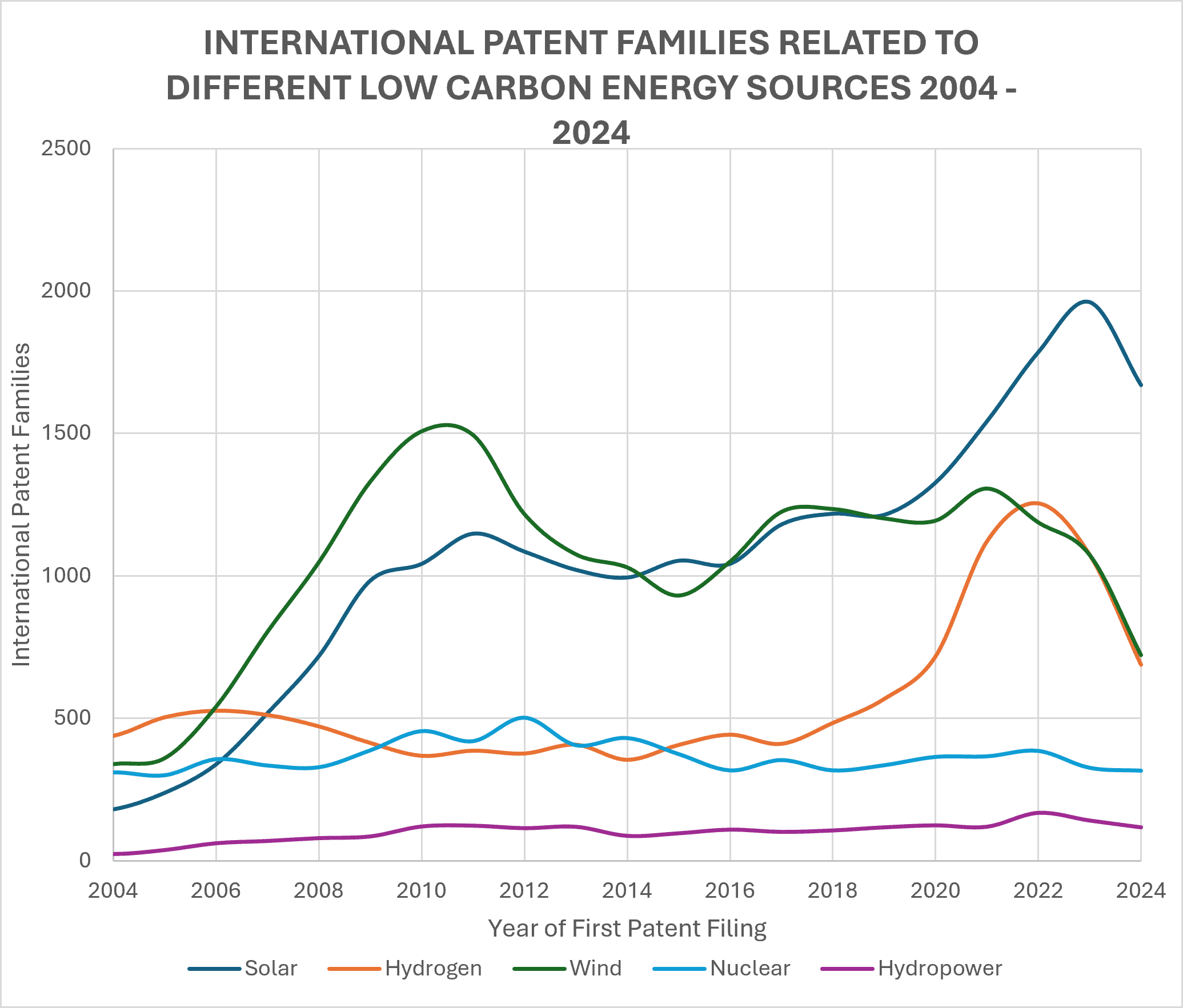
Figure 1 Numbers of inventions by low carbon energy type and year of first filing (i.e. the priority year). To limit the data to inventions which have proven significant enough to merit the costs of filing in multiple territories, the data is limited to patent families which cover more than one territory (international patent families). Overall lower numbers in 2024 are partially due to the 18 month window between filing and publication of most patent applications, which is about to close at the time of writing.
Whilst patent family filings categorised under nuclear and hydropower have remained consistent in recent years, filings directed to wind, hydrogen and solar power have followed a more dynamic path. Patent family filings related to solar energy dipped briefly between 2012 and 2014 before rebounding with remarkable force, soon eclipsing invention levels across every other low-carbon energy category. That early-2010s slowdown was driven largely by the sharp decline in solar panel prices, which triggered waves of bankruptcies and market consolidation in 2011[4], making entry into the sector more challenging. Yet falling prices also reflected the growing maturity of crystalline silicon, or “first-generation”, solar technology, as fewer technical hurdles remained to be overcome. For many industries, this is the stage when innovation begins to lose momentum and investors start chasing the next bright idea.
Solar power, however, has continued to shine. Its share of patent applications within the low-carbon sector has tripled over the past twenty years, reflecting increased demand and investment to obtain a competitive edge in this technology sector. A comparison of international patent families across major low-carbon energy technologies shows that solar now attracts more patent family filings than any other category examined. This lends weight to a Nature study which predicts “a global irreversible solar tipping point may have passed where solar energy gradually comes to dominate global electricity markets, without any further climate policies” [5].
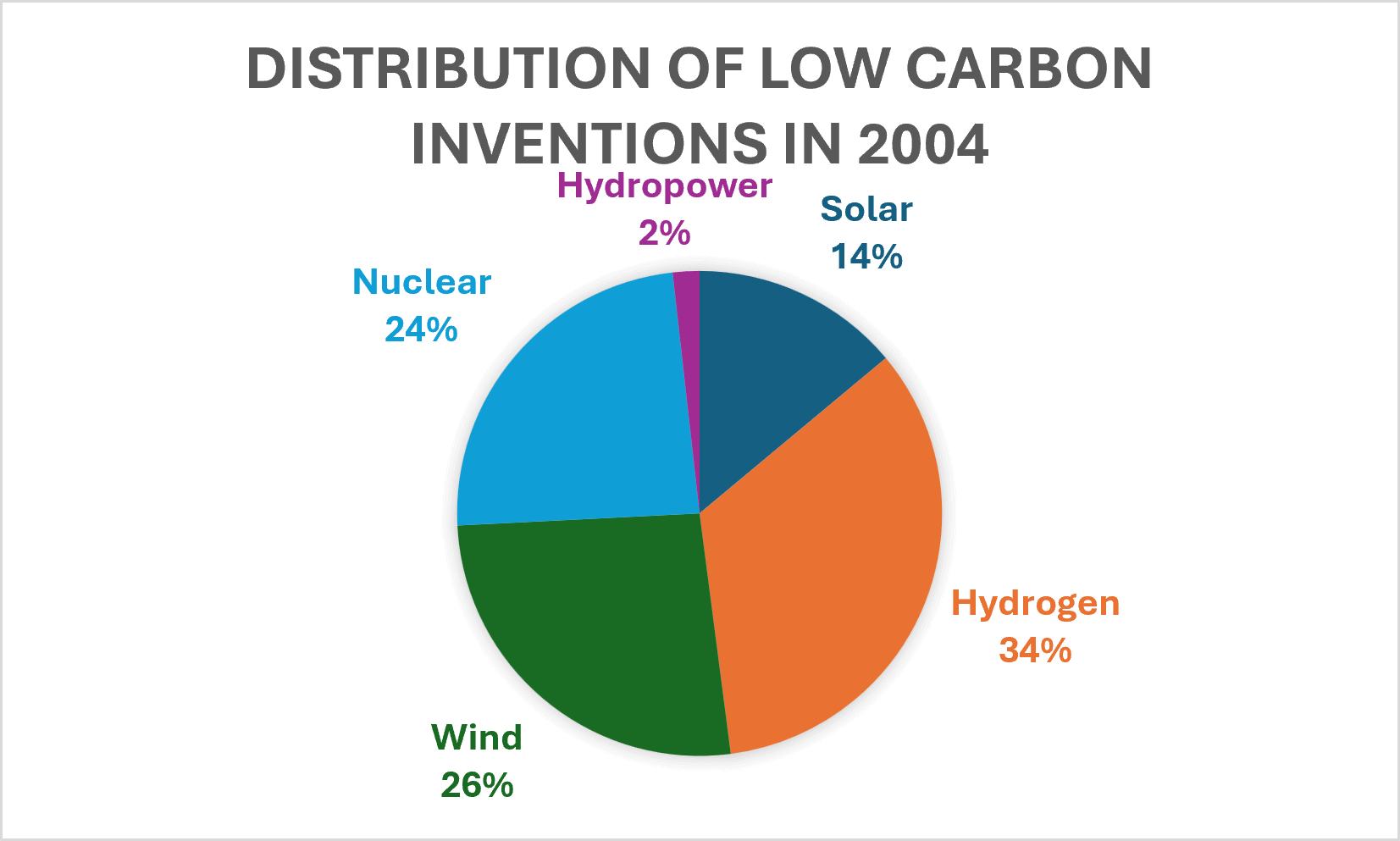
Figure 2 Distribution of international patent families with priority date in 2004 across selected low-carbon technologies.
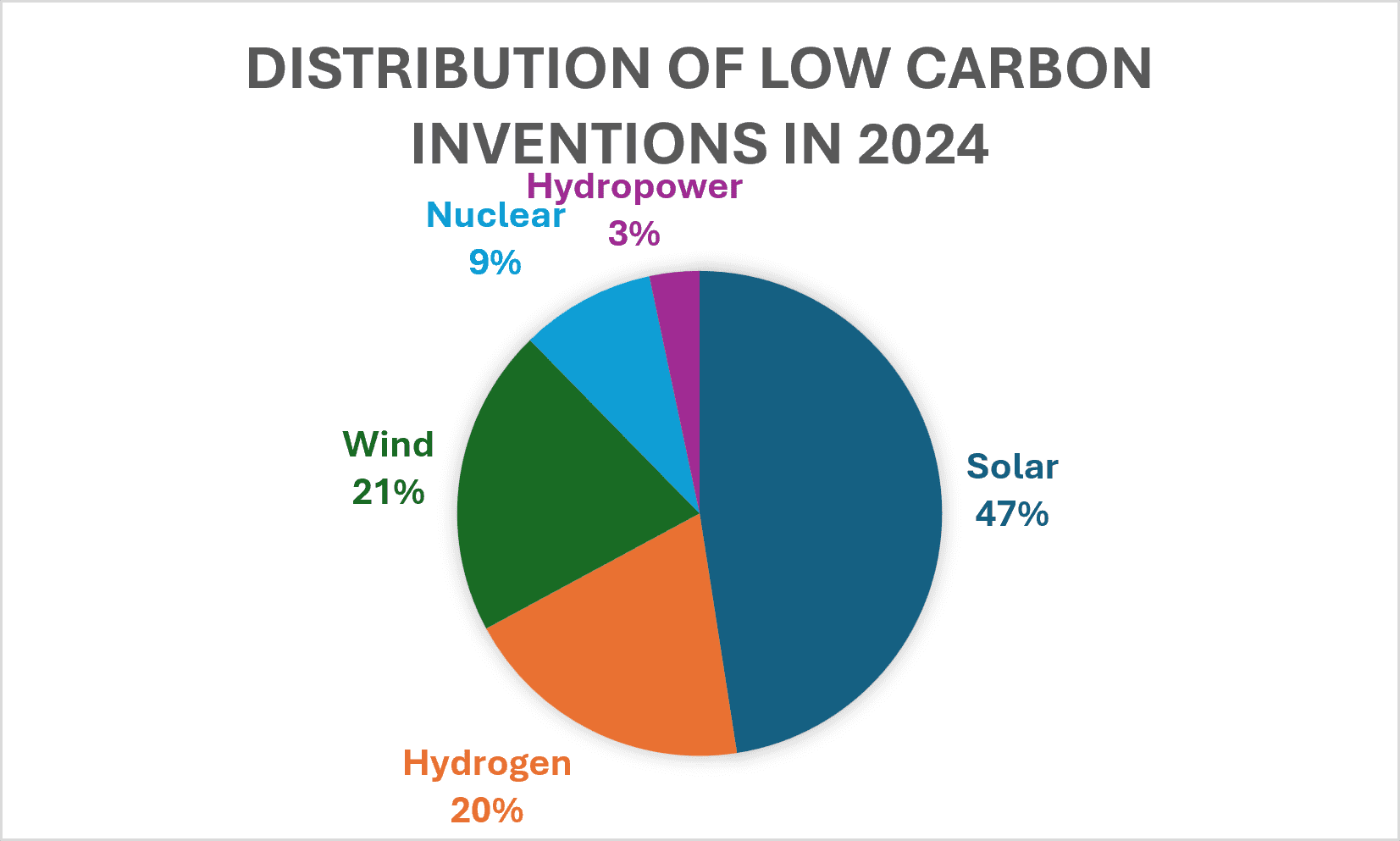
Figure 3 Distribution of international patent families with priority date in 2024 across selected low-carbon technologies. As the effect of the 18 month delay between filing and publication on the data collected for 2024 affects all areas of technology equally, the ratio between technologies is presumed to be consistent accounting for the ~1 month’s worth of applications that have not yet published that were filed at the end of 2024.
Why solar?
The latest waves of innovation appear to be driven by the need to develop new generations of solar panels and to push beyond the efficiency limitations of traditional technologies. According to a 2025 report by the EPO [6], recent areas of intense research activity in this sector include:
- Photovoltaic (PV) materials: copper oxides, dichalcogenides, group III-V and II-VI semiconductors, perovskites (inorganic or inorganic-organic hybrid), kesterites, materials for dye-sensitised solar cells and quantum dot-based materials;
- Technologies related to PV devices: bifacial solar cells, tandem architectures, thin-film technologies, optics for light management and sun-tracking systems;
- Management of PV installations: automated panel cleaning, fault detection, soiling measurement of the solar panel surfaces and AI-based diagnostic and testing technologies;
- Applications of PV devices: agrivoltaics, floating PVs on water surfaces, vehicle- and building-integrated PVs and the use of PVs for water electrolysis.
Shifting centres of gravity
While the first generation of solar panels were largely developed and refined in the USA and Europe, today’s solar patent race is being led by China, which accounted for more than half of all new international patent families filed in 2024. This surge in Chinese patent activity is likely linked to the generous increase in government grants in the early 2020s, which helped concentrate large-scale manufacturing capacity within China. According to the Organisation for Economic Co-operation and Development (OECD), the high government subsidies may have had an overall negative effect on the profitability of Chinese manufacturers and reduced competition from 2024 onwards [7]. It remains to be seen whether this will have a lasting effect on patent activity from Chinese solar manufacturers. The patent filing data also points to growing innovation activity in the Republic of Korea, which is seeking to implement an ambitious renewable energy plan [8] and where Hanwha Solutions, LG, Samsung and Hyundai are amongst the top filers.
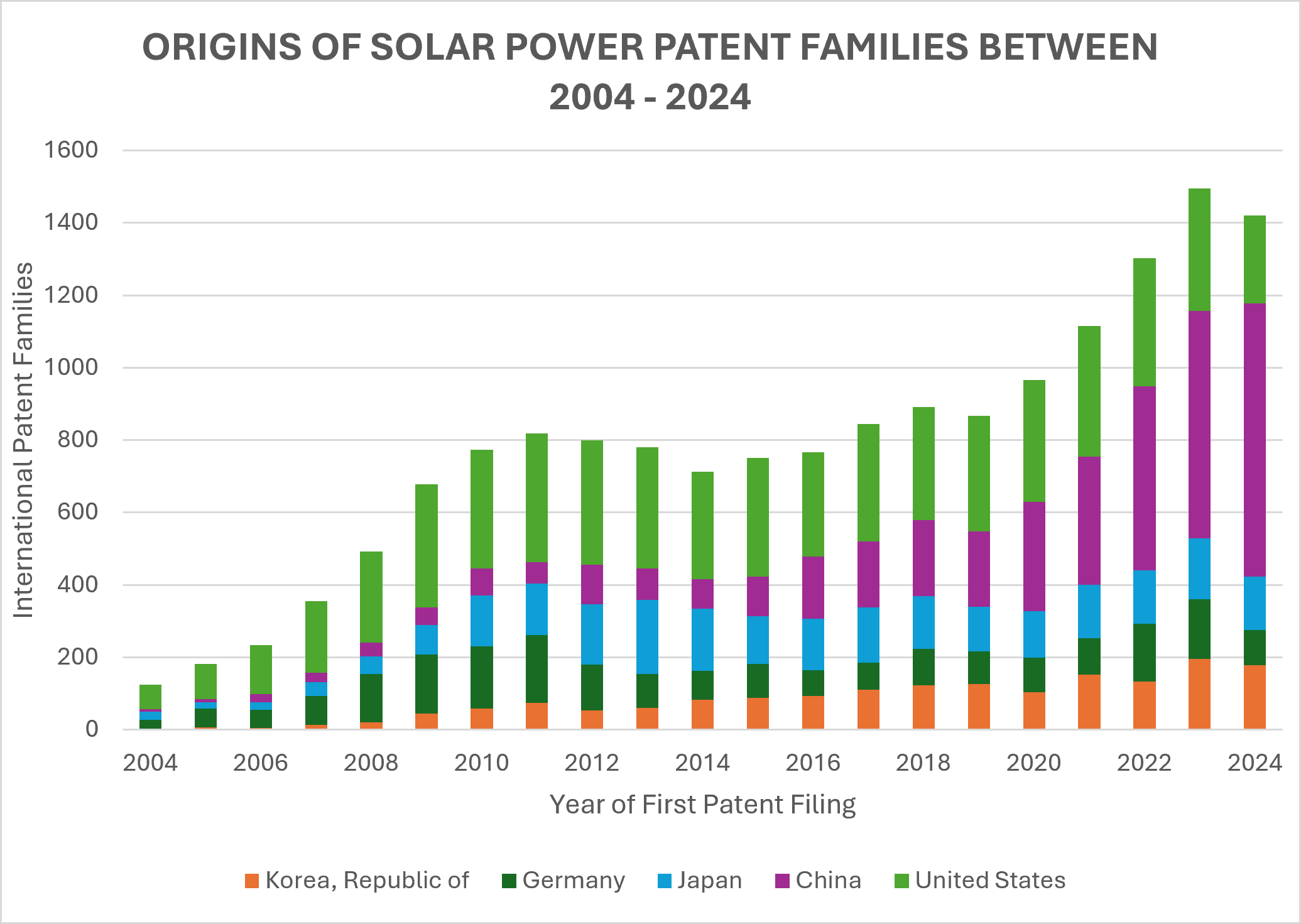
Figure 4 Annual numbers of new international patent families by year of first patent filing (earliest priority date) and country of first filing for the 5 countries with the highest filing numbers over the 20 year period studied.
While the formation of established manufacturing facilities and innovation centres in China and Korea may intensify the pressures faced by European innovators, the emergence of new generations of solar power technologies may also provide a renewed opportunity for smaller players to enter the field as these technologies are yet to fully mature. Since solar systems can often be reverse engineered and reproduced relatively easily in countries with lower labour costs, it is crucial for innovators to consider a global IP strategy early in the development cycle.
Where do we go from here?
While patent infringement is defined differently across jurisdictions, patents generally protect against unauthorised commercial use of an invention by third parties, both during manufacturing and at the point of sale or final use. Innovators should therefore consider protecting solar-related inventions not only in territories where products are likely to be manufactured (such as China), but also in regions where solar infrastructure is actively expanding, for example, India, South Africa and Saudi Arabia [9, 10].
Innovators may also wish to consider the value of patent coverage in countries heavily affected by recent energy shocks, such as parts of South East Asia, as well as in territories planning major solar projects over the next two decades, such as the Philippines and Indonesia [11, 12, 13, 14]. However, the territories in which patent protection is sought must be selected carefully to prevent costs from spiralling.
A strong understanding of international patent agreements and partnerships allows patent attorneys to design filing strategies that balance the need to capture global opportunities with the need to control or postpone costs.
Because decisions about territorial coverage generally need to be made within 12 months of the first filing date (during the “priority year”) or, in some cases, within 30 or 31 months of the first filing (for PCT contracting states if an international application has been filed), innovators should think carefully and early about where their invention or relevant competitor products are most likely to be manufactured, sold or used during the 20-year patent term. The HGF Energy team work closely with a global network of foreign associates and have extensive expertise drafting patent applications that are globally robust across different patent jurisdictions. Moreover, the Energy team has comprehensive experience developing global filing, prosecution and enforcement strategies tailored to each client’s commercial objectives.
This article was prepared by European Patent Attorney Alia Tayer, and Patent Attorney James Hitchen.