


























Articles
A Red Card for Dream Pairs? Dream Pairs Kicks Ongoing Trade Mark Infringement Dispute to the Supreme Court
June 2025
In 2023 Iconix Luxembourg Holdings SARL (Iconix) filed a trade mark infringement claim against Dream Pairs Europe Inc (Dream Pairs), in relation to the below logos. Iconix own the sportwear brand Umbro and the diamond shaped logo.
| Iconix / Umbro logos | Dream Pairs logo |
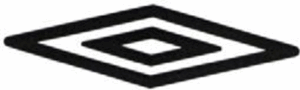
|
 |

In the first instance decision, the High Court ruled in favour of Dream Pairs on the basis that the logos were not sufficiently similar to cause confusion among consumers. However there was an emphasis on the context in which the logos were used, in the case of Dream Pairs, the use taken into consideration was mainly online on Amazon and Ebay. As a result of this context, the judge decided that consumers were able to identify the marks as being sufficiently different, given the additional information available on the webpage at the point of sale. Thus there was a low likelihood of confusion.
The first appeal: to the Court of Appeal
Iconix appealed the decision, and in a judgement handed down by the Court of Appeal in January 2024, the previous decision has been overturned and Iconix have been successful. The appeal turned on the basis that the High Court judge had not properly or fully considered the post-sale confusion aspect of the case.
There can be consumer confusion at either the point of sale, so the consumer is not readily able to identify the different brands/undertakings when making the purchase, but there can also be post-sale confusion. This is when there is consumer confusion which occurs after the sale of the goods. It can be when a consumer knows they are not buying the original brand but then others who see the brand in use are confused and mistakenly believe that it is the original, or affiliated with the original brand. This kind of confusion, even post-sale can damage a brand’s reputation or dilute its distinctiveness which is why it is an important aspect in trade mark infringement matters.
Applying this to the case, Iconix argued that consumers wouldn’t always be looking at the respective trade marks square on, they would be viewed from different angles. One specific example which Iconix raised was when the Dream Pairs mark was on the side of a football boot, it would be viewed ‘looking down at the vertically presented sign on the side of a shoe on the wearer’s foot’. This is key as it changes the marks slightly, as the angle it is viewed from affects the visual impression of the mark. Thus, the judge found that the average consumer encountering the Dream Pairs mark for the first time, affixed to a pair of football boots, worn by someone else would not know what the sign looked like when viewed straight on. Thus the average consumer would only see the mark in this context which makes it significantly higher in similarity to the Iconix mark.
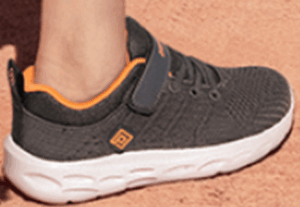
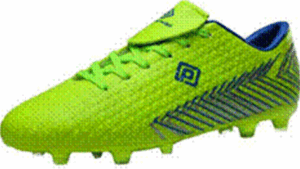
The Dream Pairs products with the challenged trade mark
The judge went on to state that this example, was a ‘realistic and representative scenario for assessing the post-sale impact of the use of the sign upon perception of the average consumer.’ The appeal was successful.
The pending appeal: The Supreme Court
Dream Pairs have now appealed to the Supreme Court and the hearing was in mid-March 2025. The decision is expected within the next six months. The appeal is ‘one to watch’ in with regards to trade mark law, as the Supreme Court has been asked to address several critical issues such as exploring the point in time at which post-sale confusion should be assessed and the methodology for determining the similarity of trade marks.
The fact that the case has reached the Supreme Court in the United Kingdom is evidence that the issues dealt with by the appeal are seen as great importance. Post-sale confusion is often viewed as a controversial subject, but is particularly important for fashion and fashion retail where logos in particular and the visual impression of trade marks are key. Some view post-sale confusion as imported increased levels of subjectivity into the comparison of trade marks. Some trade mark attorneys with a more literal interpretation of the law believe that trade marks should only be compared as registered compared to the alleged infringing trade mark as used. However, others feel that the content of use of a trade mark is key and that post-sale confusion reflects commercial realities and how brands are actually used and viewed by the public. Obviously there is significant and established case law with regard to assessing the similarity of trade marks, so this will be watched with interest as it may have a future impact on infringement cases.
Key takeaways and considerations in this case:
- Context matters: The manner in which a trade mark is presented and perceived in the marketplace is crucial in determining infringement.
- Post-sale confusion: Consumers’ perceptions after purchasing a product, or seeing it on a third party, can be as significant as their initial impressions at the point of sale.
- Real world application: the similarity assessment should take into consideration how trade marks are viewed in practical, everyday situations, not just how they are seen in static forms.
This article was prepared by Trade Mark Director Rachel Platts