
























Published Oktober 2026
The Greener GLP-1 Agonist: Innovation towards reducing the environmental impact of weight loss drugs

GLP-1 agonists have rapidly transformed the treatment of obesity and type 2 diabetes, with products such as Wegovy®, Ozempic® and Mounjaro® becoming some of the most high profile medicines in modern healthcare. Their success is now being accompanied by rising demand and, as key patents expire in some jurisdictions, the prospect of broader generic availability.
Against that backdrop, the environmental cost of producing these drugs is coming under increased scrutiny. Much of that impact comes from manufacturing the peptide-based active ingredient, which is achieved at least in part using chemical synthesis. The use of large quantities of toxic solvents (e.g. DMF), as well as PFAS or “forever chemical” reagents, in these processes is being examined more closely. Research into reducing the environmental impact of manufacturing these drugs is attracting considerable interest and is resulting in significant investment.
In this article, we explore recent and future-planned innovation towards efforts in greener peptide synthesis that may reduce the environmental impact of weight-loss medicines. In particular, we highlight greener strategies including the replacement of environmentally deleterious solvents and reagents with safer alternatives, as well as ambitious collaborative programmes to develop new bio-based methods of making these peptide-based drugs.
In addition to improving the sustainability of manufacture, this innovation also creates significant commercial opportunities in respect of protecting the resulting intellectual property.
What are GLP-1 Agonists?
Naturally occurring GLP-1 (Glucagon-Like Peptide-1) is an incretin hormone that our guts release after we eat. It binds to GLP-1 receptors to stimulate glucose-dependent insulin secretion, suppress glucagon secretion when glucose levels are elevated, slow gastric emptying and promote satiety. However, GLP-1 is short-lived in our bodies, having a half-life of about 2 minutes.
Semaglutide, the active ingredient in Wegovy® and Ozempic®, is a modified analogue of naturally occurring GLP-1. It mimics GLP-1 by binding to the GLP-1 receptor, which helps to lower blood glucose and reduce appetite. Semaglutide has been engineered to have a substantially longer half-life than naturally occurring GLP-1, enabling once-weekly dosing [1].
It has been reported that there are more than 150 GLP-1 candidates currently in various stages of development [2]. It has been predicted that the global incretin market, which includes GLP-1s, will reach $200 billion by 2030 [3].
Who are the main players in the GLP-1 agonist market?
The GLP-1 agonist market is dominated by two companies: Novo Nordisk (Wegovy® and Ozempic®) and Eli Lilly (Mounjaro®).
Semaglutide (Ozempic®) was approved by the US Food and Drug Administration (FDA) in December 2017 and the European Medicines Agency (EMA) in February 2018 for the treatment of type 2 diabetes mellitus (T2DM). Following this, semaglutide was also approved for weight management in adults with obesity or those overweight with comorbid conditions (Wegovy®) by the FDA in June 2021 and the European Medicines Agency (EMA) in January 2022 [4].
Mounjaro® gained FDA approval in May 2022 for type 2 diabetes. Tirzepatide (the active ingredient in Mounjaro® marketed by Eli Lilly) was subsequently approved by the FDA for chronic weight management in November 2023 under the separate brand name Zepbound® [5]. In the EU, Mounjaro® received an expanded indication for weight management in 2024 [6].
When do the patents expire?
For Eli Lilly, tirzepatide is protected by national patents originating from WO2016111971A1. Patent family members are due to expire in 2036 although protection extensions may be sought for example in the UK, an SPC extends protection until September 2037 [7].
For Novo Nordisk, semaglutide is protected by national patents originating from WO2006097537A2. Although the standard term of members of this patent family ended in 2026, supplementary protection, patent-term adjustments and other rights apply in a number of major markets. In the United States, listed patents and patent-term adjustments are expected to maintain relevant protection into the 2030s. In the UK, SPC/GB18/023 provides product-specific protection for semaglutide until March 2031 [8].
In 2026, compound-patent protection for semaglutide expired or lapsed in several major markets, including Brazil, Canada, China and India, although the relevant dates and the effect of secondary patents differ by jurisdiction. This has enabled generic entry into some of those.
What is the environmental impact of weight loss injections?
The increased popularity, and the inevitable decrease in price with generic semaglutide will likely exacerbate any environmental impact associated with manufacture.
A significant environmental issue with weight loss injections is the device itself. The prefilled injection pens are made from a combination of materials including glass, plastic, and metal. Novo Nordisk has a specialist scheme called ReMed™ to recycle the large amount of waste generated by these pens, which would otherwise end up in landfill or incineration [9].
Another issue is the logistics required to deliver the prescription to the end user. Unopened injection pens must be transported and stored under strict cold-chain conditions using insulated, temperature-controlled packaging and ice packs to keep the medication between 2°C and 8°C. This has a greater environmental impact in terms of energy and packaging than in comparison to ambient transportation.
However, it is arguable that the greatest environmental impact comes from manufacture of the active pharmaceutical ingredient (API) itself.
How is the Active Pharmaceutical Ingredient (API) made?
Both semaglutide and tirzepatide are synthetic linear peptides. However, Novo Nordisk and Eli Lilly take different approaches to manufacture.
Semaglutide comprises a peptide backbone of 31 amino acids, having fatty acid and linker chains attached as side chains at position 26 of the peptide chain. Within the peptide backbone, two amino acids in the natural GLP-1 structure are substituted: (i) at position 8, alanine is replaced with α-aminoisobutyric acid (Aib), which prevents breakdown by the enzyme DPP-4; (ii) at position 34, lysine is replaced with arginine (Arg) to maintain a single target site for fatty acid attachment [10].
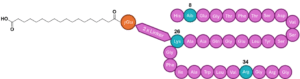
Figure 1 Structure of Semaglutide
Commercial production of semaglutide by Novo Nordisk combines yeast-based recombinant fermentation with subsequent synthetic modifications to introduce a tetrapeptide containing an unnatural amino acid and a C18 fatty-acid side chain [11]. The N-terminal oligopeptide is produced by solid-phase peptide synthesis (SPPS) [12, 13].
Tirzepatide is based on the native GIP (Gastric Inhibitory Polypeptide/Glucose-dependent Insulinotropic Polypeptide) structure, which is a different incretin hormone to GLP-1. Tirzepatide comprises 39 amino acids in its peptide backbone, and also contains a fatty acid tail, which enables the molecule to bind to albumin to slow down elimination from the body [14].
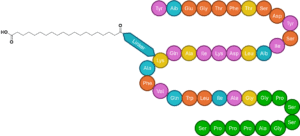
Figure 2 Structure of Tirzepatide
Eli Lilly has reported a “Kilogram-Scale GMP Manufacture of Tirzepatide Using a Hybrid SPPS/LPPS Approach with Continuous Manufacturing” [15], in which it is explained that use of recombinant technology to produce tirzepatide and fragments thereof is more difficult due to the presence of unnatural amino acids (D-Ala and N-Me-Ile) present in the peptide backbone [16]. Therefore, chemical synthesis using SPPS is employed for the manufacture of tirzepatide.
What is Solid-Phase Peptide Synthesis (SPPS)?
Solid-phase peptide synthesis (SPPS) is a synthetic technique wherein amino acids are sequentially added to a growing peptide chain, which is bound to a resin. After the chain is complete, the peptide is cleaved from the resin [17].
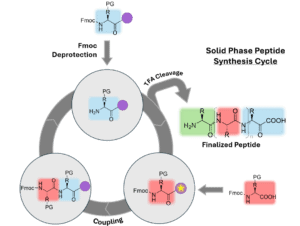
Figure 3 The process of Solid Phase Peptide Synthesis (SPPS) [18]
The steps of SPPS consist of coupling, deprotection, washing, cleavage, and purification. The amino group of each incoming amino acid is temporarily protected, commonly with Fmoc, to prevent undesired reactions during coupling. Because a carboxylic acid and an amine do not usually form an amide bond at a useful rate without activation, a peptide coupling reagent is used to generate a reactive intermediate that reacts with the amino group of the resin-bound peptide chain. After coupling is complete, the Fmoc group is removed to expose the amine for the next cycle.
The resin-bound peptide is washed, and the cycle is then repeated to add further amino acids to the peptide chain. Once the peptide chain is complete, it is cleaved from the resin. The crude peptide is then purified and lyophilised.
What are the environmental issues associated with SPPS?
The main environmental issues are as follows:
1. Solvent Use: Toxicity and Quantity during Reaction and Purification
All of these steps require large volumes of solvent, some of which are classified as hazardous or problematic by regulators. An industry estimate reported by Constructive Bio suggests that chemical synthesis of 1 kg of a GLP-1 can generate around 14,000 kg of solvent waste [19].
Dimethylformamide (DMF) is the main solvent used for the peptide coupling reaction in which the free amino acid is coupled to the growing peptide chain. It is highly effective due to favourable resin-swelling, as well as its ability to efficiently solubilize relevant starting materials and reagents as well as byproducts. However, DMF is both reprotoxic and causes liver damage. It is identified as SVHC (Substance of Very High Concern), and its use was restricted by EU REACH guidelines in December 2021 [20].
In between peptide coupling reactions, the resin-bound peptide must be washed to remove the excess reagents and any byproducts. The resin forms a “cake” at the bottom of a reactor, and as such, requires a large volume of solvent to infiltrate it to efficiently wash away the impurities.
Purification is performed using chromatography with large volumes of acetonitrile and water, generating a large carbon footprint.
2. Problematic Reagents for Deprotection of Fmoc and Cleavage of the Peptide
Removal of the Fmoc protecting group is performed using piperidine which is corrosive, and also toxic to aquatic life.
Cleavage of the finished peptide chain from the resin is performed using trifluoroacetic acid (TFA), which is toxic and classed as a PFAS or “forever chemical”.
3. Peptide Coupling Agents
The use of stoichiometric quantities of peptide coupling agents leads to poor atom economy. In addition, peptide coupling agents such as hydroxybenzotriazoles are explosive, and can also cause allergic reactions because they react with human proteins.
Is there any recent or ongoing innovation to mitigate the issues with SPPS?
Past innovation into sustainable peptide synthesis is highlighted in these review articles published in 2020 [21] and 2024 [22]. A non-exhaustive list of recent and ongoing innovation is as follows:
1. Green Solvents in SPPS
The elimination of DMF from SPPS is a priority, and there have been many reports of such work [23]. Recently, in 2024, Sweden’s innovation agency Vinnova funded a project between Polypeptide Group and RG Discovery to develop a sustainable peptide synthesis excluding DMF. The project has now concluded, and according to the Vinnova project database, it is reported to have been shown that GLP-1 drugs can be manufactured using green solvents [24, 25, 26].
2. Aqueous SPPS
The use of water as a solvent for SPPS has been explored [27, 28]. A recent study was published in February 2026 in the journal Nature Sustainability entitled “Water-based coupling of amino acids for sustainable solid-phase peptide synthesis” [29].
In 2025, Origin Peptides alongside the Centre for Process Innovation (CPI), Queen Mary University, and New Gradient was awarded £6.4 million plus further £1.3 million from industry from Innovate UK’s Sustainable Medicines Manufacturing Grand Challenge [30]. Origin Peptide’s technology involves peptide synthesis in aqueous, one-pot solution [31]. It is hoped that this project will make production faster, environmentally friendly and far less expensive, as well as strengthen the UK’s position as a global leader in this fast-growing pharmaceutical category [32]. Origin Peptides Limited has three patent families in respect of peptide synthesis [33].
3. Tag-Assisted Liquid Phase Peptide Synthesis (LPPS)
SPPS requires large volumes of solvents and reagents in order to infiltrate the resin cake at the bottom of the reactor. In tag-assisted LPPS, the growing peptide chain is supported on a soluble tag in solution. This mitigates some of these issues by reducing the quantities of solvents and reagents required [34]. Several platforms have been proposed [35].
Recently, CordenPharma has developed a novel tag for liquid phase peptide synthesis, as disclosed in the patent application WO2024194387A1. It is explained that the tag can be used with greener and lower quantities of solvents in comparison to SPPS. Moreover, the finished peptide does not require additional purification steps, which results in higher peptide yields. This leads to a more environmentally friendly approach to synthesise peptides.
In June 2026, researchers in the Richard Payne Group at University of Sydney in collaboration with Novo Nordisk reported a solution-phase platform that unites tag-assisted peptide synthesis, TAPS, with aryl selenoester amide ligation, ASAL. The strategy couples side-chain-protected, tag-bearing fragments without the superstoichiometric reagent excesses and toxic solvent washes that SPPS demands [36, 37].
4. Non-PFAS Reagents
In 2024, PolyPeptide Group published a method of final deprotection/peptide resin cleavage using HCl/FeCl3 and AcOH/FeCl3 as viable PFAS-free alternatives for TFA [38].
In 2025, Albericio et al. published a method for peptide cleavage using methane sulphonic acid (MSA) instead of TFA for global deprotection and peptide cleavage from the solid support resin [39, 40, 41]. MSA breaks down in the environment into benign products.
In early 2026, the ACS (American Chemical Society) Green Chemistry Institute Pharmaceutical Round Table announced funding worth $80,000 per project with key research area grant topics including “Identification of Alternatives to Trifluoroacetic Acid (TFA) in Peptide Couplings/Cleavages” and “Greening Peptide Production” [42, 43]. The guidance states that “methods should employ solvents deemed by the ACI GCI as sustainable and avoid use of any fluorinated solvent system/reagents” [44].
5. Novel Approaches for Peptide Coupling
The use of enzymes as biocatalysts in chemo-enzymatic SPPS for the synthesis of peptide therapeutics has previously been explored [45]. Most recently, in a review published in August 2026, the use of amide bond synthetases (ABS) and ATP-grasp ligases (AGL) involved in peptide natural product biosynthesis, and their use in the synthesis of therapeutically relevant peptides is highlighted [46]. Although this approach has not yet been applied to the manufacture of a GLP-1 agonist, it is promising. Biocatalysts can operate under comparatively mild conditions and may reduce reliance on stoichiometric peptide-coupling reagents, but the overall environmental benefit must be assessed across the complete process, including enzyme production, solvent use, purification, yield and waste treatment.
In respect of recent developments in synthetic chemistry, the patent application WO2026159715A1 describes a phosphonium coupling reagent for forming peptide bonds, which was found to lead to higher yields of the desired peptide product whilst maintaining stereochemical integrity.
6. Biomanufacturing
In March 2025, Innovate UK awarded £913,659 via the Sustainable Medicines Manufacturing Innovation Programme (SMMIP) to Constructive Bio in collaboration with Centre for Process Innovation (CPI) for a project entitled “The Bio Revolution for weight-loss drugs: Enabling biomanufacturing of blockbuster GLP-1 agonists” [47]. Constructive Bio’s platform, which was published in Nature in 2019 [48], uses a recoded strain of E. coli, Syn61 to incorporate unnatural (or non-canonical) amino acids (ncAAs) into single protein and peptide chains. The total synthesis of semaglutide and tirzepatide has not previously been possible due to the presence of unnatural amino acids. It is hoped that this project will demonstrate the ability to manufacture GLP-1 agonists via fermentation in an aqueous medium, instead of needing solvent-based chemical synthesis.
How are generics companies making semaglutide?
Generics companies have now launched products in markets wherein patent protection for semaglutide has expired [49, 50]. It has been reported that generic semaglutide is being produced using a fully synthetic method for distribution in Canada [51].
Several patent applications have been filed in respect of the manufacture of semaglutide [52], which appear to be focused on approaches using traditional synthetic methods of peptide manufacture including SPPS, LPPS, and assembly of peptide fragments.
Can one manufacturing process simply be swapped out for another?
The short answer is no. The manufacturing process influences impurity profiles, stability, and immunogenicity, which could affect clinical outcomes. As a consequence, the approval of generic versions of semaglutide requires a rigorous demonstration of both quality and clinical comparability with the original API [53].
Both the FDA and the EMA have issued guidance for industry highlighting the need for the peptide-based active ingredient to be the same, whether manufactured using chemical synthesis or recombinant technologies [54].
However, the approval of generics as well as the development of new GLP-1 agonists offers innovators an opportunity to improve the manufacturing process of these pharmaceuticals.
Beyond weight loss injections: Oral formulations
Wegovy® is now available as a pill in the UK, following MHRA approval on 11 June 2026 for weight loss and weight management [55]. It contains semaglutide, so manufacture of the peptide API remains an environmental concern. The oral formulation also requires a substantially higher daily dose because semaglutide is poorly absorbed from the gastrointestinal tract. However, more positively, Wegovy® tablets avoid multi-material injection devices and do not require refrigerated storage.
Small molecule GLP-1 agonists may provide the greatest potential in terms of reducing environmental impact. Typically, small molecules have a much lower “Process Mass Intensity” (PMI) than large molecules or “biologics”, wherein PMI is defined as the total mass of materials used (raw materials, reactants, and solvents) to produce a specified mass of product. It has been estimated that a typical small molecule therapeutic has a PMI range of 168 to 308 kg material use per kg of API, whereas oligonucleotides (which are assembled and purified in an analogous manner to peptides) have a PMI range of 4,299 kg/kg on average [56].
Orforglipron (marketed as Foundayo) is the first small molecule GLP-1 agonist to receive FDA approval in April 2026, and MHRA approval in August 2026 [57, 58].

Figure 4 Structure of orforglipron
Conclusion
The rapid uptake of GLP-1 agonists has delivered important benefits in the treatment of obesity and type 2 diabetes, but their growing use brings the environmental impact of their manufacture into sharper focus.
The approaches outlined in this article show that innovators are already pursuing several routes to reduce that impact. For example, replacing hazardous solvents and PFAS reagents, reducing solvent quantities, developing more efficient coupling chemistry, and exploring fermentation-based manufacture. These efforts demonstrate that environmental performance is becoming an important focus of pharmaceutical process innovation.
In addition, patent expiry can widen the opportunity to revisit production methods because it allows a broader group of manufacturers to enter the market and develop their own commercially viable routes to the same active ingredient. Instead of reproducing the original process exactly, generic manufacturers may be able to design alternative synthesis, purification and scale-up strategies, provided that the resulting product satisfies the applicable requirements for identity, quality, and clinical comparability, and does not infringe any remaining IP rights such as patents to a process of manufacture, which may be yet to expire.
Greater competition, combined with the need to manufacture at lower cost and higher volume may create both the incentive and the commercial setting for greener processes to move from research into industrial practice. This represents a strategic opportunity for innovators to generate valuable intellectual property and differentiate their manufacturing capabilities to secure an advantage in a competitive market.
At HGF we have attorneys who specialise in all areas of industrial chemistry, many of whom have a keen interest in green chemistry. We are always excited to help with new inventions in the green chemistry field.
This article was prepared by Senior Patent Attorney Jennifer Carlisle.