























Articles
Hermès-Inspired Hacks: Using your trade mark ‘outside of the box’
January 2025
French luxury goods manufacturer, Hermès International, almost lost protection for its signature ‘H’ figurative trade mark earlier this year when the EUIPO’s Cancellation Division issued a decision to revoke the brand’s EU registration on the grounds of non-use.
The Hermès name in itself carries weight in the fashion world and is seen as the epitome of luxury. The same can said for its iconic branding. The brand adopted a distinct shade of orange for its product packaging over fifty years ago, and today, the orange Hermès boxes, along with its logos  ,
, ,
, ,
, , amongst others, are key components of Hermès’ visual brand identity.
Indeed, the French brand has secured trade mark protection for these elements in the UK and EU, with the exception of the colour orange in the EU – while Hermès has successfully registered the colour orange in various countries worldwide, the EUIPO refused its application for the same in 2005 on the basis that the colour lacks distinctiveness.
Obtaining trade mark protection in the EU, especially in trying to substantiate an acquired distinctiveness claim where a non-distinctive trade mark is concerned, can be more burdensome than the UK because of the number of territories an EU trade mark covers. For an acquired distinctiveness claim, evidence attesting to the acquisition of distinctive character typically needs to be shown throughout the EU for greater odds of success. The territorial coverage of an EU trade mark also means that earlier trade mark holders across the twenty-seven member states could be notified about the publication of a trade mark application, increasing the chances of an opposition arising, and for similar reasons, an EU trade mark may be more susceptible to post-registration challenges.
The EU appears to be a troublesome area for Hermès, as although it successfully registered the logo,, in the EU on 8 September 2016, this registration was challenged on the grounds of non-use, by a German individual named Markus Bennemann.
The registration covered a range of goods in class 25, namely, “clothing for men, women and children, boots, shoes, slippers, fashion clothing accessories for men, women and children, namely hats, caps, bonnets, gloves (clothing), neckties, belts (clothing), scarves, pocket squares, sashes for wear, shawls, socks, stockings, tights, suspenders, rings for scarves”.
To maintain its registration, Hermès needed to prove a reasonable level of genuine use of the “H” mark throughout the EU between the period of 13 June 2017 until 12 June 2022.
Hermès submitted evidence of use of the “H” symbol in the following forms, which includes “H” design on the infamous Oran sandals:
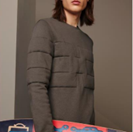

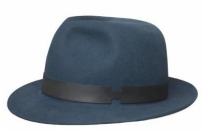


The French brand was initially unsuccessful in its attempt to defend its registration. The EUIPO’s Cancellation Division stated that “where the contested trade mark is reproduced as a product’s shape or part of a product’s shape, it is not used in relation to goods or services” and issued a decision to cancel Hermès’ registration as a result.
Hermès filed an appeal against the unfavourable decision on 24 January 2024. In the appeal, Hermès argued that the “H” shape, incorporated into the design of its products, is distinctive and is widely recognised as such in the luxury market.
Its arguments were supported by extensive evidence showing that consumers perceive the “H” design as being synonymous with, and emblematic, of the Hermès brand. Hermès’ evidence included a French market survey showing that consumers are accustomed to seeing trade marks integrated in the front part of a sandal (the ‘vamp’), and the following examples of sandal models by other high-end designers such as Louis Vuitton, Valentino, Fendi, and Dolce & Gabbana:
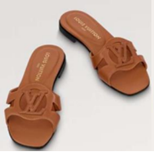
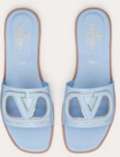
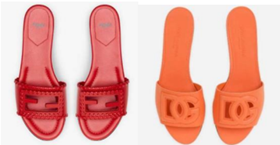
Hermès’ efforts were not unrewarded as on 6 September 2024, the EUIPO’s Board of Appeal partially ruled in its favour, deciding that the brand had made genuine use of the “H” mark in relation to “shoes, t-shirts, sweatshirts and rings for scarves” in class 25. The Board of Appeal found that consumers in the luxury sector are more likely to notice subtle design elements, such that, Hermès’ use of the “H” element to form the shape of its sandal vamps, for example, would not be seen as merely ornamental but as a functioning trade mark identifying the origin of its products.
Although the Cancellation Division’s decision was upheld for the remaining class 25 goods, the Board of Appeal’s ruling is still a win for Hermès as the case has been sent back to the Cancellation Division for further review in respect of “shoes, t-shirts, sweatshirts and rings for scarves”. This decision sets the tone for the EUIPO’s position on unconventional uses of trade marks and whether the same can amount to genuine use.
Holiday Hints:
- use of a trade mark as part of a product’s physical design could satisfy the “genuine use” requirement under EU law, if it can be shown that it denotes commercial origin;
- fashion brands should consider creative ways to present their signature trade marks in market, not only for progressiveness, but doing so could serve as a lifeline to maintain the validity of your trade marks;
- unconventional elements of branding, even those that may initially be perceived as being ornamental or decorative, could afford trade mark protection that stands the test of time; and
- brand consistency and monitoring market trends are important – Hermès’ evidence of use and surveys exhibited a coherent and recognizable visual identity in the EU market which made substantiation of the genuine use requirement easier. Its demonstration of how other leading luxury brands have adopted the same practices in market also played a part in convincing the Board of Appeal that its uses possess trade mark significance.
If you are ever in doubt as to whether your branding may be eligible for trade mark or design protection, you can contact the author, Hanna Tiyamiyu, or your trade mark attorney for further information and advice.
The full Board of Appeal decision can be found here.
This article was prepared by Trade Mark Attorney Hanna Tiyamiyu