
























Published March 2017
Wearables
Being prepared to protect fashion and function. It’s been discussed in theory and forecasted. But technology is disrupting fashion and retail now. The successful ones will be those who research, innovate and plan, rather than joining the party late and for the sake of it, and this should include a clear IP strategy to protect assets and ensure clear water with competitors.
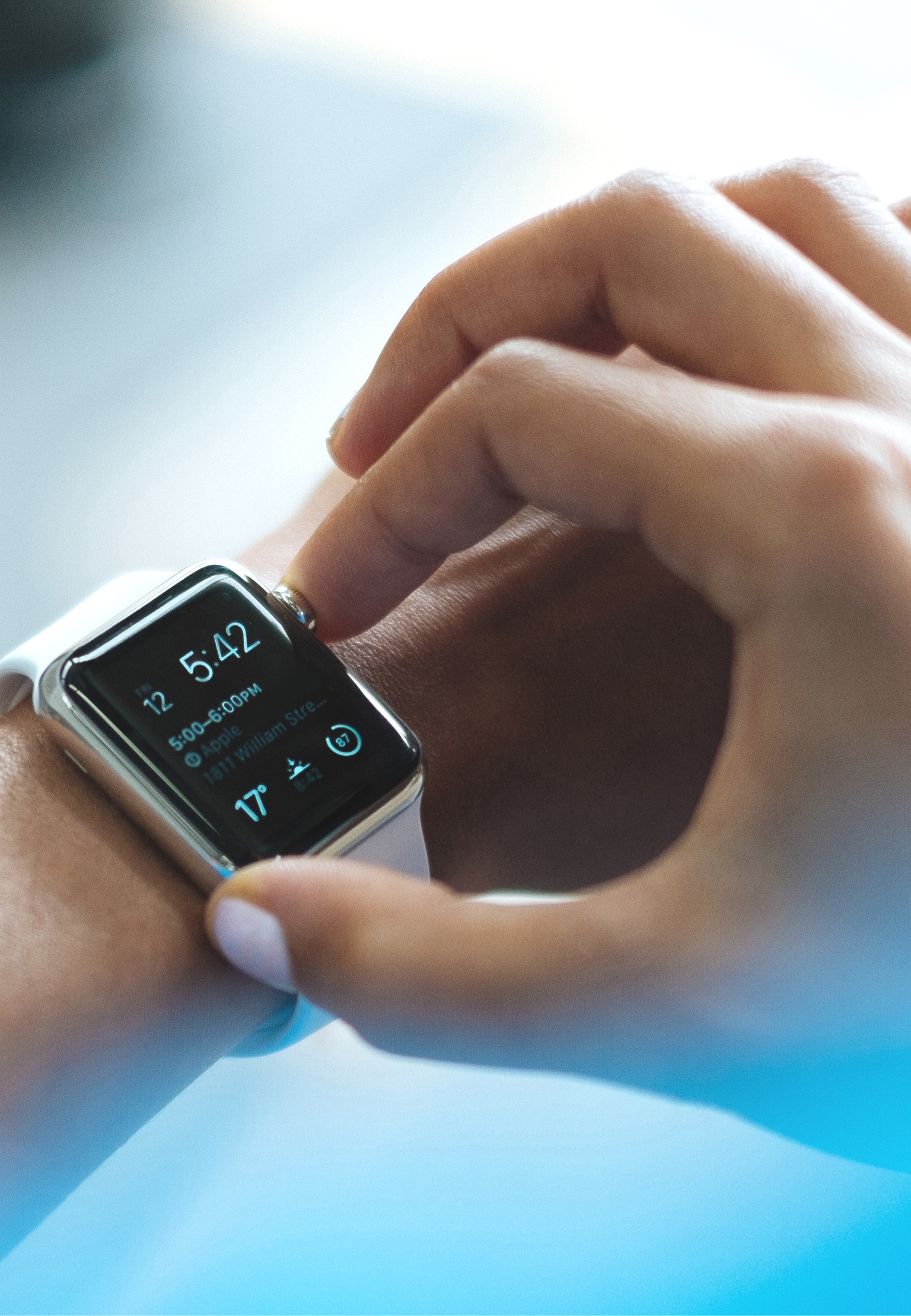
By definition ‘wearable technology’ products are electronics which can be worn on the body, either as an accessory or even as part of the material used in clothing. Existing wearable technology products are largely reserved for accessories such as smart glasses, watches and fitness bands, however developments are notably being made aside from these. Smart fabric sensors and electronic textiles are at the forefront of this, these have the capability to measure force, pressure, chemicals, humidity and temperature variations, which can prove incredibly useful. An example of this is the ‘smart baby onesie’ by Rest Devices in the US, which contains durable sensors woven into the fabric itself and acts a wearable baby monitor, tracking skin temperature, breathing and activity levels and sending these statistics to a parent or caregivers smartphone or tablet.
Searching needs some more thought
Branding and design are undeniably crucial and influential factors in consumer purchasing decisions, which ultimately establishes the success of any fashion goods. Trade mark registration supports the establishment of unique, identifiable and strong brands.
Wider thinking may be needed when deciding on the goods and services to cover with a trade mark for wearable technologies, in particular to ensure that protection is given for both fashion and function. Google Inc. own EU trade mark registrations for both ‘Google Glass’ and ‘Glass’, covering various wearable peripherals and computer-related goods in Class 9. They do not cover spectacles. Fitbit, Inc. own EU registrations for ‘Fitbit’ covering pedometers and related computer software in Class 9. They do not cover watches or bracelets in Class 14. It should be remembered that comparison of such goods is still largely untested. It should not be assumed that a registration for wearable computers would give the owner a basis of opposition to the use and registration of a similar mark for watches. These goods are not necessarily similar; that both types of goods could originate with the same undertaking may be the exception rather than the rule. In an EUIPO Opposition between Google, Inc. and V4Tel, Inc. based on reputation under Article 8(5) EUTMR, the Opposition Division held there to be a “certain link” between the wristwatches and computer hardware and software for use in connection with mobile devices. However, brand owners will not always be able to furnish sufficient evidence to establish reputation and will instead need to be in a position to argue that the goods are similar and that a likelihood of confusion will arise.
Equally, it is important to ensure all classes of relevance are searched when clearing a brand for wearable technologies. Should a search be extended to Class 14 for jewellery for example?
From mortar to wrist – protecting the virtual shop window
Design rights protect the aesthetics of a product and exist in both registered and unregistered form, provided the design is new and not entirely practical. These will therefore be prevalent forms of intellectual property as tech further expands within fashion. As the shop window moves from mortar to wrist, retailers may wish to consider protecting app features such as GUIs and icons as they appear on the face of wearable devices.
The technology associated with these products is highly complex, therefore where anything new and inventive is created it should be at the forefront of the developers mind to consider and seek advice as to whether it warrants patent protection. Equally, design owners should be conscious of incorporating technological patents of others in their usually non-technical products. The reader is reminded of the suit against Ralph Lauren in 2015 relating to its “Ricky” bag with interior light.
Whilst software is not generally considered patentable in the UK and EU, source code, where original, is copyrightable. It must be noted however that copyright only protects the source code itself and not functionality but this protection could still prove invaluable in capturing the technology fashion market.