

























Articles
Design (registrations) to win -this time its GIN! – M&S vs ALDI
March 2023
This case illustrates how a well thought out design registration strategy helped Marks and Spencer (M&S) win the day against the discount specialist, Aldi. It is another chapter in the ongoing saga between established product/brand leaders and the producers of affordable/discount lookalikes. This time the products in question are festive themed light-up novelty gin/liqueur bottles with the drink containing gold flakes.
The underlying message is that M&S’ design registrations gave it a strong basis to successfully assert design infringement and prevent the use of Aldi’s lookalike product. Highly attractive aspects of registering designs include their speed of registration and their relatively modest cost. Such registrations can provide an effective deterrent against third party copying of the get-up/appearance of products.
Of course, M&S and Aldi already know each other well. Only a year ago they were loggerheads over Aldi producing the (in)famous “Cuthbert the Caterpillar” cake that sailed somewhat “too” close to the wind as regards M&S’ much loved “Colin the Caterpillar” novelty cake. The case settled on a confidential basis but we know Aldi did stop selling Cuthbert.
Gin bottles
Some of the M&S registered designs

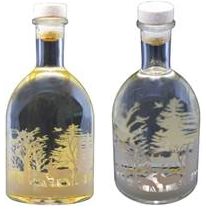
Aldi’s bottle
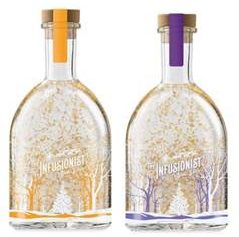
As regards the gin bottles, the Intellectual Property Enterprise Court (IPEC) recently held that Aldi in selling their gin liqueurs infringed registered designs owned by M&S. [2023] EWHC 178 (IPEC).
Assessing design infringement can be complex and it is a multi-stage process. A key factor is the degree of novelty of the registered design as this affects the scope of protection given to it. A basic proposition is that “protection for a strikingly novel product will be … greater than for a product which is incrementally different from the prior art (i.e. from existing designs known as the design ‘corpus’)”. It was also interesting to note that the IPEC took into account the product descriptions applied to the UK Registered Designs in interpreting what the photos actually covered in the registered designs. Some of the registered designs were interpreted as having a ‘light up’ feature as a result, which potentially was a key consideration in the comparison of the alleged infringing design and the registered designs.
However, the ultimate infringement test is whether the allegedly infringing design (Aldi’s bottle) produces on the informed user (held in this case to be someone who purchases drinks who pays a high degree of attention to the bottles when using them) a sufficiently different overall impression or not from M&S’ registered designs.
The Court found the following similarities between the respective designs and that these cumulatively would have a ‘striking’ effect on the informed user:
- The identical shapes of the two bottles taking into the account existing design ‘corpus’.
- The identical shapes of the two stoppers.
- The winter scene and tree silhouettes.
- The snow effect created by the gold flakes in respect of certain of M&S’ designs.
- The integrated light in respect of certain of M&S’ designs.
The differences between the bottles, as argued by Aldi, including the use of ‘Infusionist’ branding, the ‘watch strap’ over the Aldi stopper, the darker colour of the stopper, and the lack of deer on the Aldi bottle were not sufficient to create a different overall impression and avoid infringement. These differences were held to relate to ‘relatively minor detail’.
Aldi have indicated that they intend to appeal this decision, so the story may not end here.
Take-aways
This case highlights the relevance of considering registering designs to protect the appearance of new products.
Design registrations in their own right can serve as a deterrent as parties do (or should) search design registers when creating a comparative product.
Enforcement of registered designs is not always straightforward but it can be successful where a third party takes undue inspiration from (i.e. copies) an existing design, even if there are some differences between the designs (as with this case here).
The more novel a design the higher the degree of likely protection.
Be creative when registering designs as many versions of the same design can be registered relatively inexpensively and quickly. Iterations can cover the whole product as well as simplified versions featuring on the core novel element/elements. This can significantly enhance protection and created a thicket of rights that a third party will find harder to design around or, at the least, will encourage the would-be imitator to differentiate its product more from the existing design.
However, do not forget the one year grace period for the self-disclosure of designs. In this case, the M&S product went through a series of iterations. Only one of those iterations was disclosed more than one year before the registered designs were filed and although ultimately did not destroy the novelty of the registered designs, was taken into account in the consideration of prior art. Remember a clock is ticking on filing your registered designs post-disclosure to the public.
Whether this decision will encourage established businesses to take on producers of lookalikes more often is yet to be seen but it probably is safe to bet that this case will not be the last dispute on these types of lines.
This article was prepared by HGF Partner & Trade Mark Attorney Geoffrey Smith.