

























Published March 2024
A late Christmas present for M&S in Christmas gin bottle design dispute
On the 27th February 2024, the English Court of Appeal rejected an appeal by Aldi Stores Limited (‘Aldi’) against an earlier decision of the Intellectual Property Enterprise Court (‘IPEC’) on 24th February 2023, that they had infringed a number of United Kingdom Registered Designs in the name of Marks and Spencer Plc (‘M&S’) for the design of a light up Christmas gin bottle.
A copy of the full Court of Appeal Judgement can be found here https://www.bailii.org/cgi-bin/format.cgi?doc=/ew/cases/EWCA/Civ/2024/178.html&query=(aldi)+AND+(marks).
The complained of products are shown below:

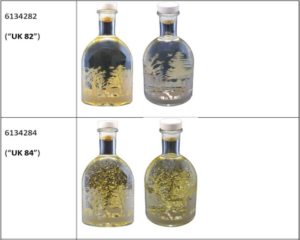
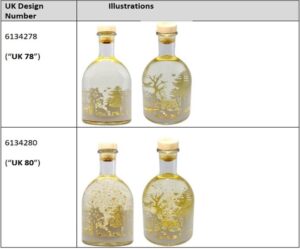
The various UK Design Registrations in the name of M&S are shown below:
No error of law: appeal rejected
In order to succeed in the appeal, Aldi had to show that the original judge had made an error in law in finding the designs under consideration gave the same overall impression. This generally is a hard hurdle to overcome, especially as I will explain later, the Appeal judges largely rejected Aldi points criticising the original judges reasoning framing that assessment. The Court of Appeal rejected Aldi’s contention that an error of law had been made, and concluded that the designs at issue did give the same overall impression.
Points of interest
A large amount of the appeal was spent on arguments over what the registered designs actually covered and what was the relevant date for assessing the registered designs for the purposes of the assessment of infringement, including the interaction with the one year grace period with regards disclosure.
Drawings, products and descriptions
UK Registered Designs have tended to stand and fall on the representations of the designs submitted. The golden rule has generally been that it should be easy for a judge or indeed a competitor to determine the subject matter of the registered designs, and to a degree their scope, from the design drawings alone. However, it is clear from this decision that issues beyond the design drawings can be used by a judge in their interpretation of the drawings. Arguments in the Appeal centred on whether the design drawings were for a light up bottle and whether the ‘dark’ background to some of the design drawings impacted that assessment. The Appeal Judges found that all the designs were for a bottle containing a clear liquid with a light therein. Further, the judges were guided in that interpretation by the actual product on sale. Inspecting the actual products on sale to confirm conclusions already drawn by the design drawings is permissible and thus it is clear that design drawings cannot be viewed solely in the abstract.
Another factor which impacted the Appeal judge’s assessment of the design drawings was the product indication of the registrations. The judges found that the product description of ‘light up gin bottle’ provided an unambiguous answer to what the registered designs were intended to cover. The product indications and the viewing of the actual product sold backed up the assessment that the registered designs covered light up gin bottles containing a clear liquid.
A question of the grace period for disclosure and priority dates
Maybe unsurprisingly, the Appeal Decision found that the designs, both identical and largely similar, disclosed by M&S, in the one year grace period before the relevant dates, here found to be the priority dates of the registrations, should be disregarded when assessing the question of infringement. The one year grace period is designed to give a registrant time to launch a design and determine whether it is successful before going to the expense of registering the design. Although it is clear that self-disclosure within this grace period could not be used to destroy the novelty of the design registrations concerned, Aldi argued that disclosure in this period could impact the assessment of the scope of the registrations from an infringement point of view. This argument was rejected by the Court of Appeal. In many ways, the one year grace period should be viewed a safe haven for the registrant on disclosure in the period prior to the filing of the registrations.
Further, the priority dates of the design registrations, not the filing dates, are the relevant dates for assessing the overall impressions of the designs.
Conclusion and points of practice
To be frank the reasoning of the Court of Appeal was clear and reasonable and possibly some might argue unsurprising. However, the case is of interest as it clarified certain points, in particular the impact of product descriptions and the design of the actual product in use on the interpretation of the registered designs. Further it clarified the impact of the impact of the grace period, and what designs are disclosure in that period, on the infringement assessment. This leads to a number of practice points. Firstly, although here M&S successfully relied on the product description and the design of the product in use, it is always wise to make the design drawings crystal clear as to the nature of the product and the registered protection being sought. Also at times product descriptions are often given little thought, being traditionally viewed for classification purposes only. However think about your product description!
Finally what this case highlights is the usefulness of design protection with regards product packaging and combatting lookalike products.