


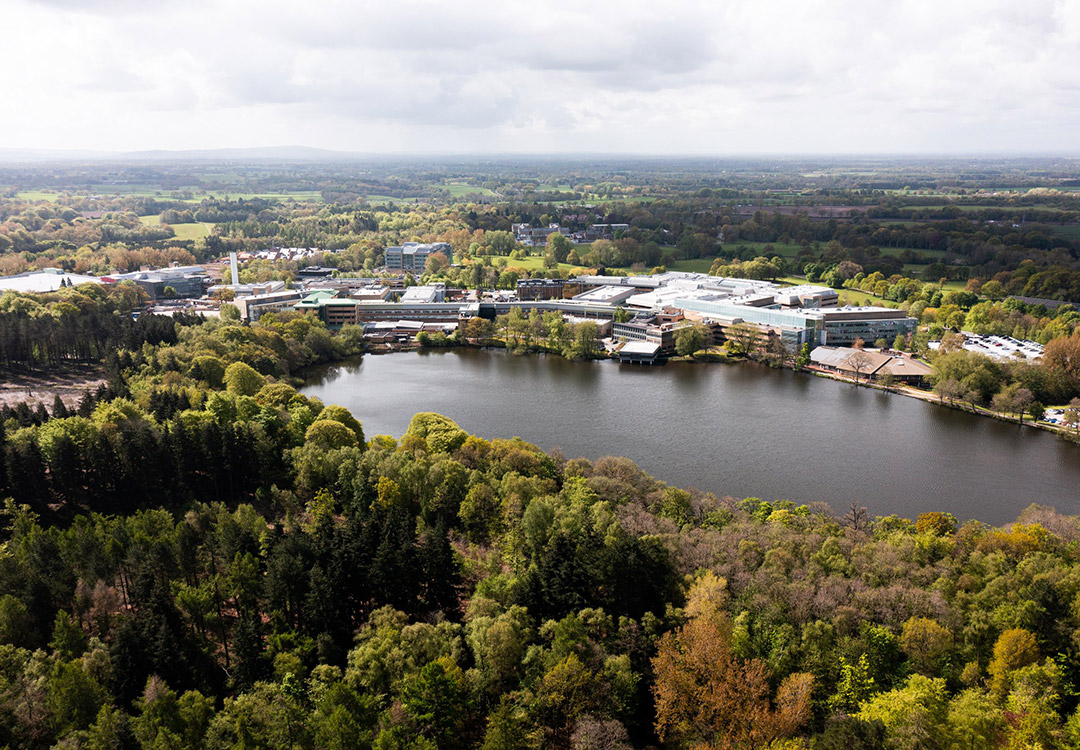
























SMRs could create new frontiers for innovation — and IP protection — in data-centre infrastructure.
SMRs and Data Centres
Artificial intelligence is fuelling a rapid expansion of data centres worldwide. Training and running advanced AI models requires enormous computing resource, and consequently vast amounts of power. At the same time, major technology companies are under increasing pressure to reduce the carbon footprint of their operations. This has triggered growing interest in energy solutions capable of delivering reliable, around-the-clock low-carbon electricity at scale.
Nuclear energy is increasingly being viewed as one of the few technologies capable of meeting these requirements. Among nuclear technologies, Small Modular Reactors (SMRs) have attracted particular attention. SMRs are nuclear reactors that are a fraction of the size of conventional gigawatt-scale nuclear stations and are designed to be manufactured in modules that can be deployed individually or combined to meet increasing demand.
Compared with traditional nuclear power plants, SMRs inherently offer several potentially attractive advantages, including:
- Lower upfront costs
- Incremental deployment as demand grows
- Reduced construction complexity
- Potential for redundancy from using multiple separate modules
- Potential for on-site deployment due to reduced footprint
These characteristics align well with the needs of modern data centre manufacturers, where power requirements may increase significantly over time and resilience/redundancy is critical.
As a result, major technology companies have begun investing heavily in nuclear technologies. Google has partnered with Kairos Power, Amazon has supported projects involving X-energy, and Meta has publicly expressed interest in nuclear-powered infrastructure. Governments have also recognised the strategic importance of pairing low-carbon energy generation with AI infrastructure, with initiatives emerging to accelerate the deployment of advanced nuclear technologies (US).[1],[2],[3]
Innovation at the interface?
The increased investment in nuclear technologies is reflected in the number of patent families filed globally in classes G21C and G21D of the International Patent Classification (IPC) codes, relating to ‘Nuclear Reactors’ and ‘Nuclear Power Plants’ respectively (note that the years 2025 and 2026 have not been included since a large proportion of these applications have not yet been published).
In addition to SMR technology more generally, it seems likely that there will be innovation at the interface between SMRs and data centres. Cooling technologies may be one such area where innovation may occur.

Data Centre cooling
Modern AI data centres convert a large proportion of consumed electricity into heat. As computing densities increase, cooling is becoming one of the most important design constraints facing data centre operators. It is therefore essential that cooling capacity is maintained within these data centres. Unlike many other low-carbon power sources, nuclear reactors produce both electricity and substantial quantities of thermal energy. Some developers are therefore exploring systems capable of using waste reactor heat directly to assist with data centre cooling, potentially improving overall energy efficiency.
One notable example is Deep Atomic, which has attracted attention for its SMRs allegedly optimised for co-located data centre applications and integrated cooling architectures using waste reactor heat.[4]
Whilst Deep Atomic has seemingly not yet announced the details of their integrated cooling system, there are a number of emerging cooling technologies which may provide integrated solutions. These include[5]:
- Absorption and adsorption cooling
- Waste heat recovery technologies
- Direct liquid cooling integration
- Hybrid cooling architectures
Taking these cooling technologies as an example, it is clear that patent filings in this area have increased significantly since 2015 – conveniently aligned with AI adoption – as evidenced by the graph below showing the growth in patent families filed globally in the IPC codes F25B15, F25B35, F25B37, F25B39 relating to cooling.

Taking the F25B37 classification which includes adsorption cooling as an example, adsorption cooling systems use waste heat (less than 100OC) to drive a refrigeration cycle. Heat releases refrigerant (e.g., water) from a solid adsorbent (such as silica gel); the refrigerant then evaporates under vacuum, absorbing heat and producing cooling. The refrigerant is subsequently re-adsorbed, and the cycle repeats.
Of recent applications in the F25B37 classification (having a priority date between 2023 and 2024), only a very small proportion of these were filed by applicants directly involved in nuclear reactor design. Instead, patent filings appear to be led primarily by refrigeration specialists, universities, research institutes and renewable energy companies.
This may be indicative of a lack of patentable innovation in developing adsorption chillers specifically for the interface of SMRs and data centres. Or at least, the innovation may be in the more generalised cooling technology, not specifically dedicated to nuclear or data centre applications.
Alternatively, it may be that innovators in this area are simply not capturing and protecting IP generated at the interface of SMRs and data centres. For example, researchers may not be identifying patentable innovation where SMRs are being specifically adapted for use with data centres (or vice versa).
Summary
Although the findings above were inconclusive, in such a fast-growing area it seems inevitable that there will be innovation at the interface between SMRs and data centres. Whether in adsorption cooling, grid integration, energy storage or digital infrastructure integration, it is critical that innovators are able to identify and protect their IP to safeguard their investment and maintain a competitive edge.
For expert guidance on identifying patentable inventions, conducting patent landscape searches or protecting IP more generally, contact HGF’s specialised Energy team.
[1] https://www.world-nuclear-news.org/articles/google-and-kairos-power-team-up-for-smr-deployments-in-us-first, https://blog.google/company-news/outreach-and-initiatives/sustainability/google-kairos-power-nuclear-energy-agreement/, https://www.kairospower.com/google
[2] https://x-energy.com/news/amazon-invests-in-x-energy-to-support-advanced-small-modular-nuclear-reactors-and-expand-carbon-free-power/, https://www.aboutamazon.com/news/sustainability/amazon-nuclear-small-modular-reactor-net-carbon-zero, https://world-nuclear-news.org/articles/amazon-invests-in-x-energy-unveils-smr-project-plans
[3] https://www.reuters.com/business/energy/meta-strikes-nuclear-power-agreements-with-three-companies-2026-01-09/, https://introl.com/blog/meta-6-6gw-nuclear-deal-terrapower-oklo-vistra-2026
[4] https://www.world-nuclear-news.org/articles/deep-atomic-launches-smr-for-data-centres
[5] https://www.sciencedirect.com/science/article/pii/S2949790626001898
This article was prepared by Patent Director Craig Morrison and Trainee Patent Attorney Jess Leale.